First Steps
A task app that shrinks a big task down to its first small step, so you'll actually start.
Project Overview
Outcomes
- Validated two features (Little Steps + time grouping) with a diary study before building anything
- Final testing showed tasks felt less intimidating and days easier to plan
Timeline
3.5 months · 2018
The Problem
It's hard to start and finish the tasks that actually matter. The bigger and more meaningful a task, the easier it is to avoid.
The Solution
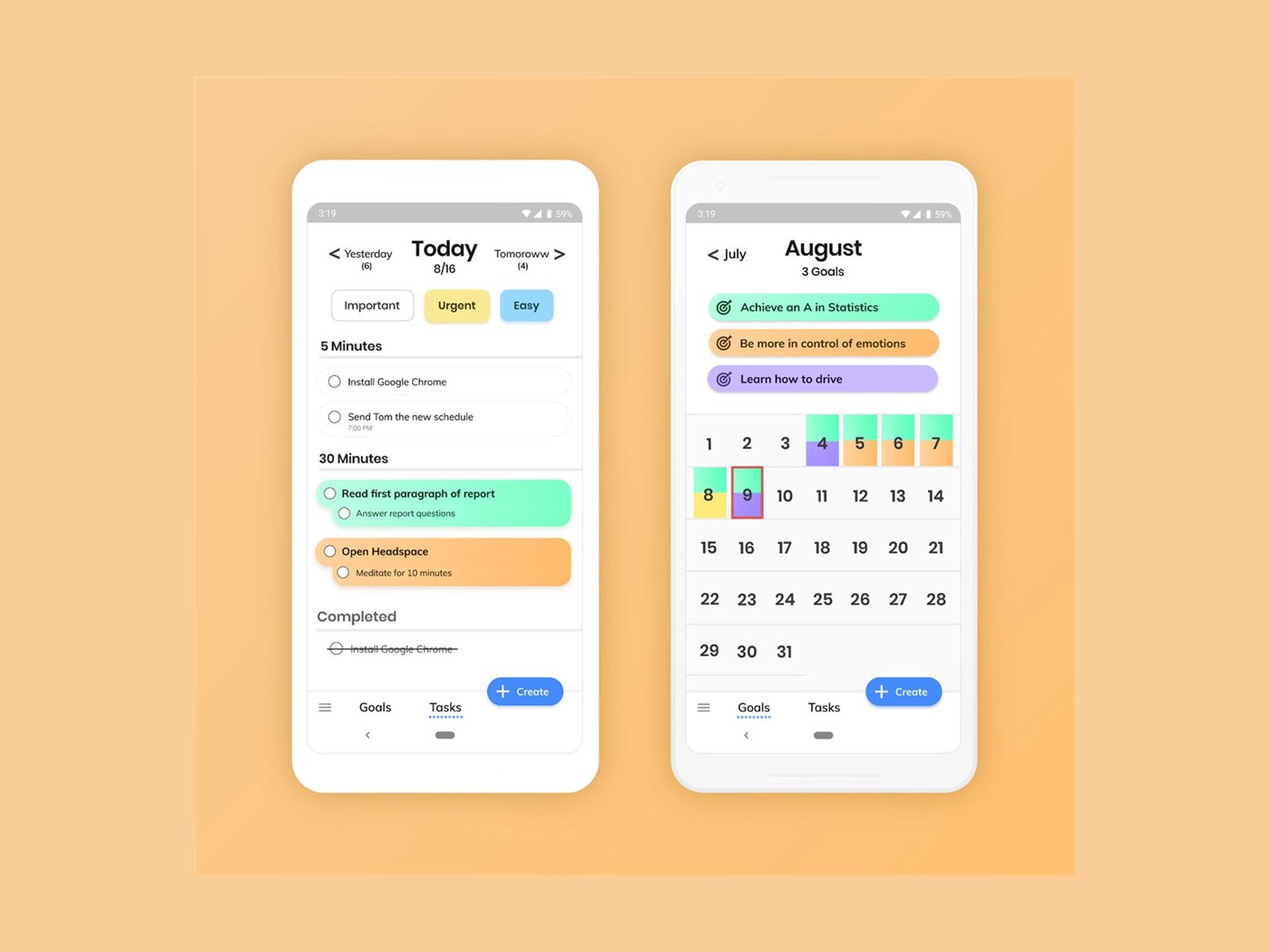
First Steps groups tasks by how long they'll take and nudges you to name the very first step, which makes a daunting task feel approachable enough to begin.
My Role
Solo, end-to-end (UX class)
I Personally Owned
- Research & interviews
- Competitor analysis
- Personas
- Diary study
- Wireframing & prototyping
- Usability testing
My Process
Research
GoalUnderstand what gets in the way of meaningful work
There's no shortage of task apps promising to make us productive. But much of what we do is what's expected of us, draining time from what actually matters. I wanted to dig into what it really means to be productive, and how an app could help people spend time on what they care about.

Interviews & Pain Points
GoalHear how people manage their time
I interviewed people on campus who felt they struggled with task management. A clear pattern emerged around starting, focus, and overcommitting.
- People lose time to inefficient work, cutting into hobbies and rest.
- Focus breaks easily with so many distractions.
- Starting is the hard part, especially for longer, harder tasks.
How often do you achieve what matters to you personally, day to day?
“I never feel like I have time for what I truly want to do.”
What's hardest about managing your time?
“It's often harder for me to start the bigger tasks in the day.”
How do you manage tasks now?
“I make a list that's a little overambitious for what I can actually do. I like to think I can do it.”


Competitor Analysis
GoalSee where task apps fall short
Rather than checking off features, I judged apps on what makes task-building actually work: how meaningful they help your tasks feel, how much they motivate you to start, and how clearly they're organized.
- Most apps make creating a task easy but do little to help you finish it.
- Apps that add meaning to task creation tend to get harder to organize.

Personas
GoalDesign for real people, not an average
From the interviews I built two personas to keep ideation honest: people who want their days to feel meaningful, but get stuck starting and lose focus along the way.


Sketching the Features
GoalTarget the start, and the sense of time
Sketching toward the problem, I landed on two ideas. Little Steps is the smallest thing you can do to get going, the MVP of a task, because starting is the hardest part. Time estimation asks you to guess how long a task will take, which builds a clearer sense of how your day is actually spent.

Diary Study
GoalTest the ideas before building anything
Instead of jumping to a prototype, I tested the features by hand. Participants who felt unfulfilled with their days logged three kinds of task (simple, with a Little Step, and with a Little Step plus a goal) and estimated each one's duration in a shared doc. It worked. Little Steps made tasks feel less overwhelming, and grouping by estimated time gave people a much better read on their day, even gamifying it as they tried to beat their own estimates.

Wireframes & Testing
GoalPut the validated features into an interface
I built low-fidelity wireframes around Little Steps and time grouping and tested them in Marvel. The wording tripped people up: framed inside task creation, "little step" read like a minor subtask rather than the point. Keeping it front and center is what makes a task feel less daunting, so that became the thing to fix.

Final Design
GoalMake the day feel manageable
In the final design, the Little Step sits above the main task to signal what takes priority, and tasks group by how long they take. In testing, people found it easy to organize by time and priority, and their days felt less intimidating and easier to grasp.


My Impact
People feel more fulfilled when what they finish connects to what they actually care about. The surprising part is how small a nudge it takes: name the first step, see the time, and a daunting day becomes a manageable one.
What I'd do differently
Test the idea before the pixels
The diary study taught me more than any prototype could have, and it cost nothing but a shared doc. Validating the concept by hand first meant the design started from something I already knew worked.
Next project